A-4.2 Describe Fall Protection Systems
There are different methods of providing fall protection. A fall protection system is defined in the OHS Regulation (Part 11) as:
- A fall restraint system
- A fall arrest system
- Work procedures that minimize the risk of injury, such as using a safety net, that are acceptable to WorkSafeBC
Fall Restraint System
Fall restraint systems prevent a worker from falling from a work position, or travelling to an unguarded edge from which the worker could fall. Examples are guardrails or a personal fall protection system. This may include the use of a control zone with a safety monitor when fall protection is not practical. A control zone is the area within a minimum of 2 metres of the edge of a structure or building that has a flat or low-sloped roof. The control zone and work area are separated with a raised warning line, limiting access to this unsafe area. The safety monitor supervises work in the control zone according to the fall protection plan. One safety monitor can supervise no more than eight workers. If workers will not enter the control zone and the pitch of the roof is less than [latex]\frac{4}{12}[/latex], a safety monitor or other fall protection is not required.
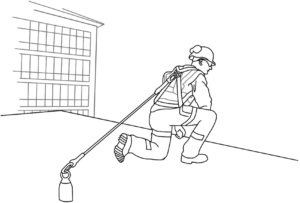
Watch the following video by WorkSafeBC (2009) titled “Fall Protection: Fall Restraint (3 of 6)” [2:15] on YouTube.
If you are using a printed copy, you can scan the QR code with your digital device to go directly to the video: Fall restraint

Fall Arrest System
Fall arrest systems stop a worker’s fall before the worker hits the surface below.
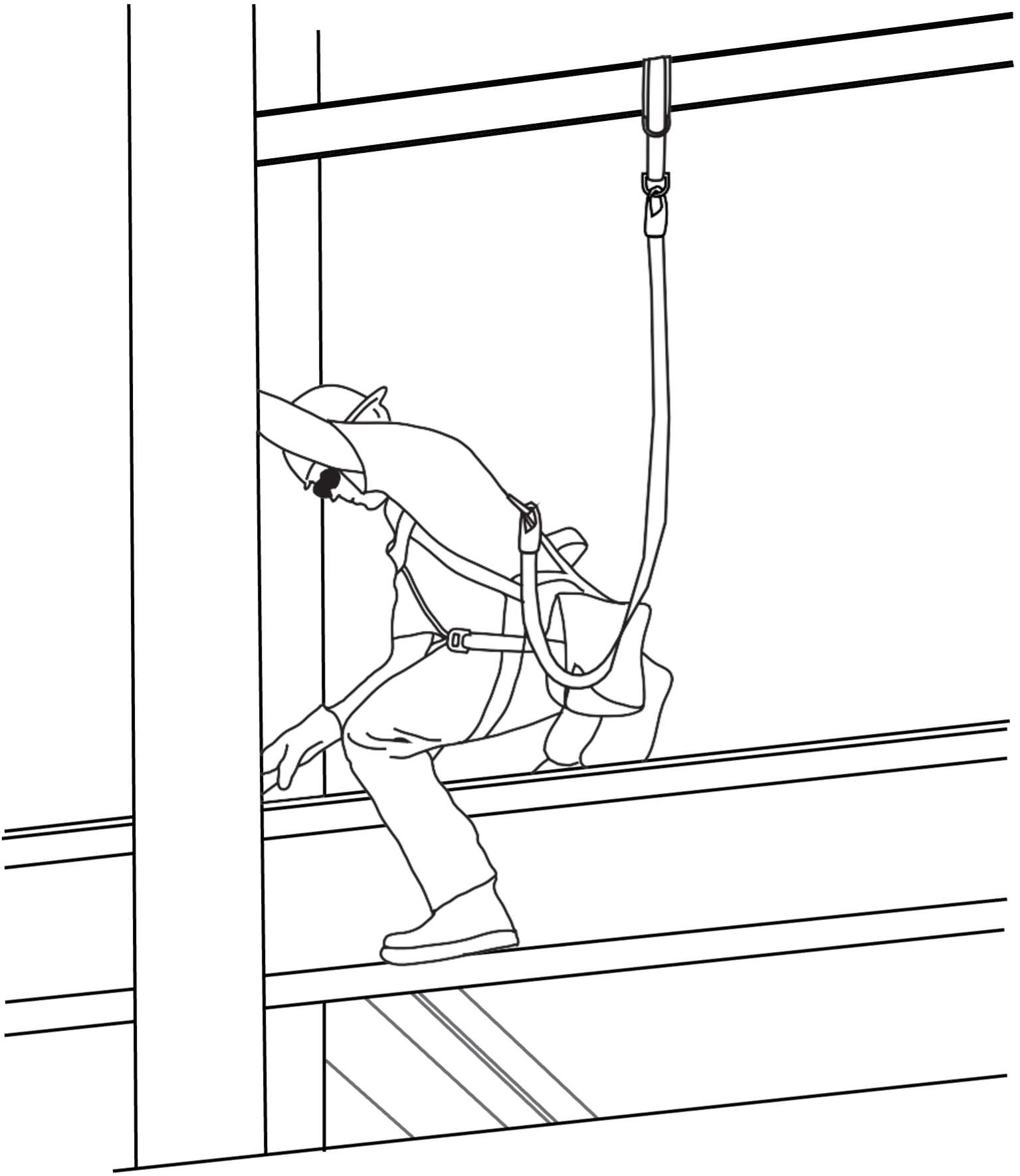
Watch “Fall Protection: Fall Arrest (4 of 6)” [3:13] by WorkSafeBC (2009) on YouTube.
If you are using a printed copy, you can scan the QR code with your digital device to go directly to the video: Fall arrest

Fall Protection Equipment
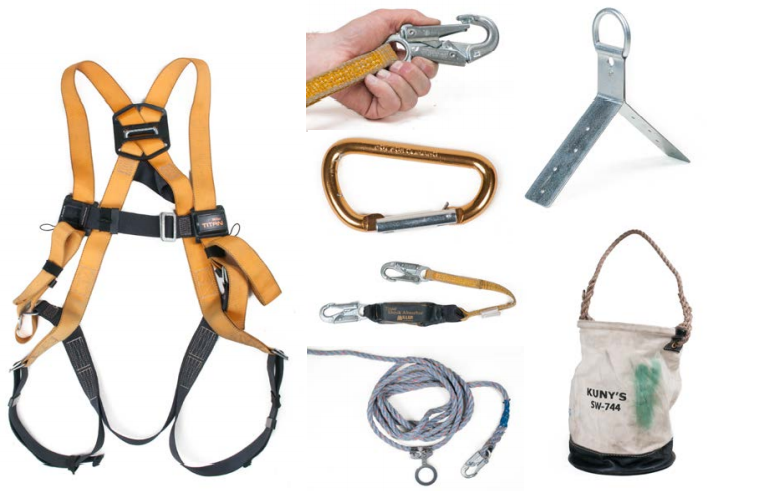
A worker’s personal fall protection system will have different equipment depending on whether it is a fall arrest or a fall restraint system. It will include:
- A safety belt or full body harness
- A lanyard, lifeline, and any other connecting equipment that is used to secure the worker to an individual point of anchorage or to a horizontal lifeline system

Review OHS Regulation part 11 “Fall Protection” on the WorkSafeBC website.
Harness and Belts
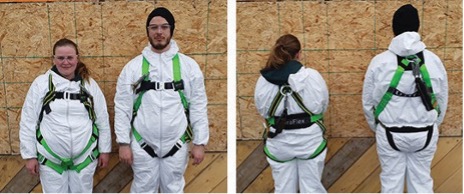
When using personal fall protection equipment, wear a full body harness if you are at risk of falling. A full body harness consists of straps passed over the shoulders, across the chest, and around the legs. It also has a D-ring or support point at the rear between the shoulder blades.
In a fall, a full body harness will protect you more than a safety belt because the harness distributes the force of impact over a greater area of your body. A belt should be used only as part of a fall restraint system. It is important to adjust the harness to fit your body. A poorly fitting harness is uncomfortable and may not protect you properly.
Connecting Equipment
There are various types of equipment that can be used to connect the harness to the anchor point.
Lanyard
A lanyard is a flexible line of webbing, or a synthetic or wire rope used to secure a safety belt or full body harness to a lifeline or anchor.
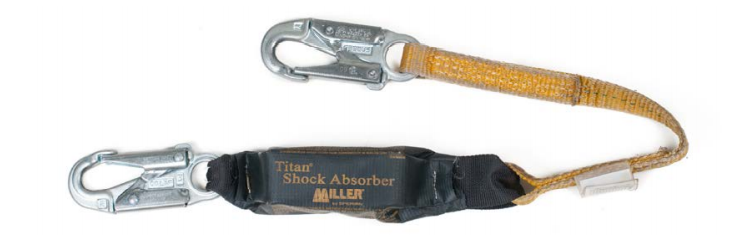
Deceleration Device or Shock Absorber
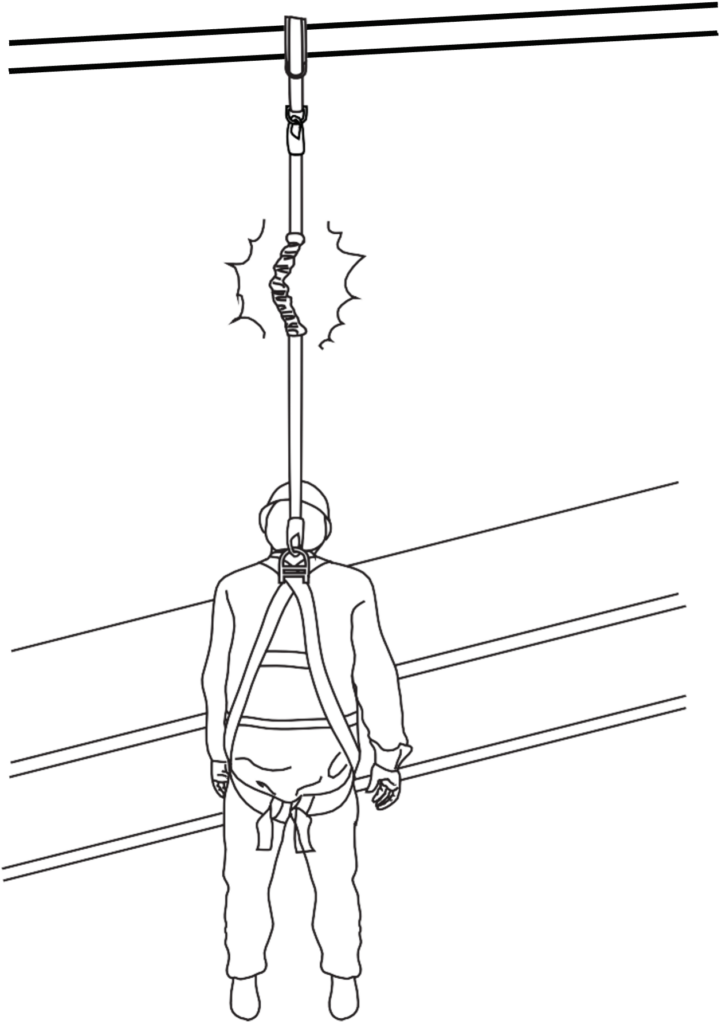
A common method of reducing the impact strain on the body and the anchorage system is to use a deceleration device. These devices are designed to slowly release energy and absorb the initial shock. The device may use a spring or tear-webbing design. It is important to know that this shock absorber may increase the length of the lanyard during a fall by as much as 1.2 m (4 ft), which must be allowed for in the design of your personal fall protection system.
Lifeline
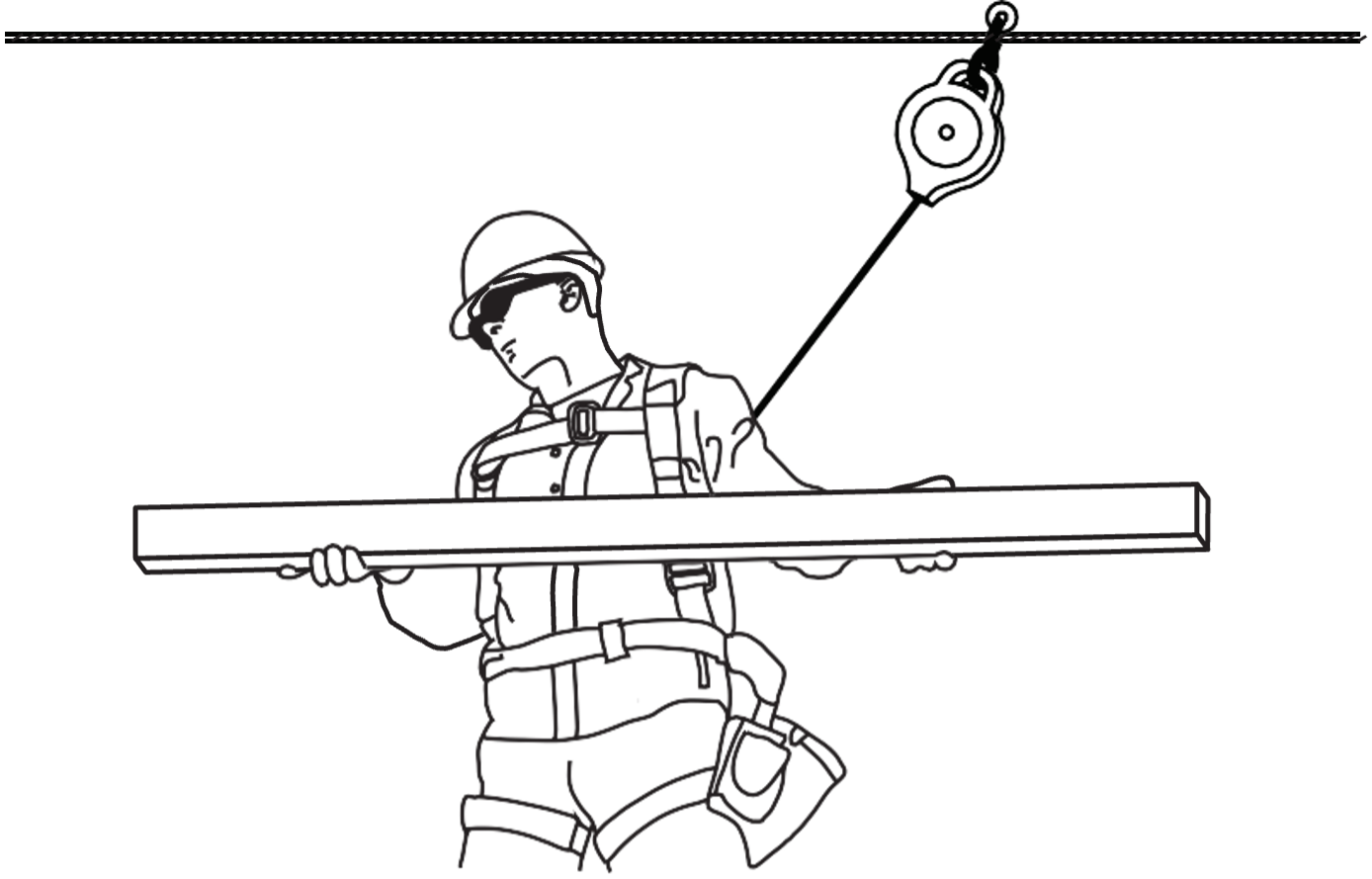
Lifelines can be vertical or horizontal and made of synthetic fibre or steel wire rope. A retractable lifeline is a special type of vertical lifeline. It is fastened to a horizontal lifeline unless the manufacturer allows alternate use.
Vertical lifelines have a breaking strength of 26.7 kN (6,000 lb). Horizontal lifelines can be permanent or temporary and are installed between two secure anchor points. Permanent horizontal lifelines must be certified by a professional engineer.
Temporary horizontal lifelines are permitted with certain restrictions. They can be manufactured for commercial use, provided the use and installation are in accordance with the manufacturer’s written instructions. They can also be engineered and installed according to written instructions from a professional engineer.
Alternatively, they can be installed with many restrictions.
WorkSafeBC lists the following requirements:
- The horizontal lifeline is a minimum 12 mm ([latex]\frac{1}{2}[/latex] in.) diameter wire rope having a breaking strength specified by the manufacturer of at least 89 kN (20,000 lb.)
- The horizontal lifeline is free of splices except at the terminations
- Connecting hardware, such as shackles and turnbuckles, has an ultimate load capacity of at least 71 kN (16,000 lb.)
- The span is at least 6 m (20 ft) and not more than 18 m (60 ft)
- End anchors have an ultimate load capacity of at least 71 kN (16,000 lb.)
- The horizontal lifeline has an unloaded sag of approximately the span length divided by 60
- The elevation of the line at any point is at least 1 m (39 in.) above the working surface
- The free fall distance is limited to 1.2 m (4 ft)
- A minimum of 3.5 m (12 ft) of unobstructed clearance is available below the working surface
- No more than three (3) workers are secured to the horizontal lifeline
- The horizontal lifeline is positioned so it does not impede the safe movement of workers.
Refer to An Introduction to Personal Fall Protection Equipment from WorkSafeBC (2014) for more information.
Retractable lifelines work like the seat belt in a car. These are under constant tension, and the moment you fall, the lifeline locks.
Rope Grab
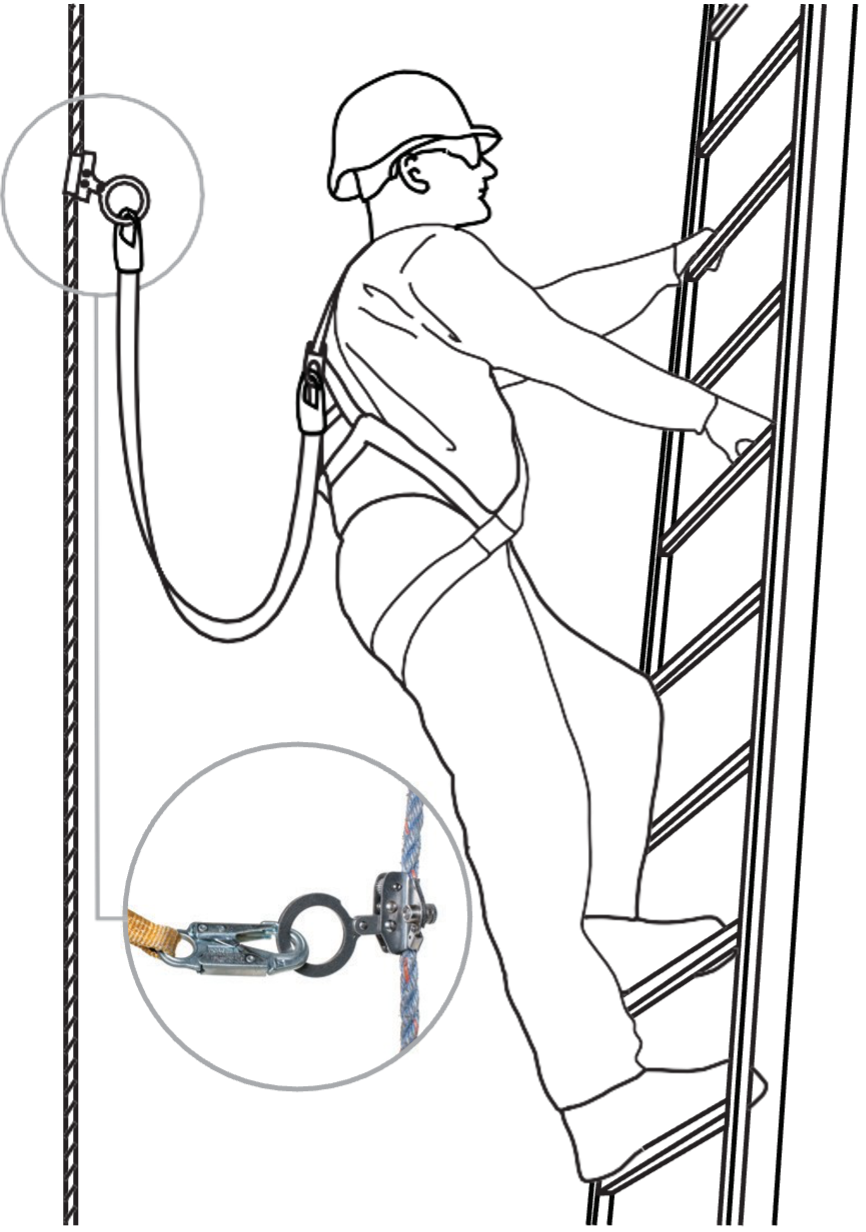
A rope grab is used to connect the lanyard to a vertical lifeline. The rope grab travels along the lifeline with you and will lock onto it if you fall.
Snap Hook or Carabiner
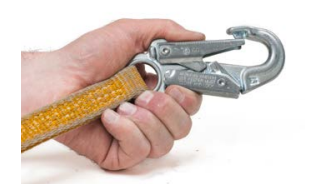
Snap hooks are used to connect lanyards to rope grabs, harnesses, and horizontal lifelines. Snap hooks must be self-locking, so that the hook can’t be open unless you depress a separate locking mechanism before opening the keeper.
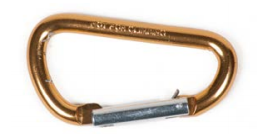
A carabiner is an oblong-shaped connecting device also used to attach different components of a personal fall protection system. A carabiner should have gates that are both self-closing and self-locking, with a breaking strength of at least 22 kN (5,000 lb.). It should also have the manufacturer’s identity and load capacity clearly marked on it.
Inspection, Storage, and Maintenance
To maintain service life and performance, all fall protection equipment should be inspected frequently. Damage can include burns, hardening due to chemical contact, and excessive wear. Fall protection equipment must be inspected by a qualified person and replaced or recertified if any damage is found. Always store fall protection equipment in a dry location away from any substances that could cause deterioration.
 Self-Test A-4.2: Describe Fall Protection Systems
Complete Self-Test A-4.2 and check your answers.
If you are using a printed copy, please find Self-Test A-4.2 and Answer Key at the end of this section. If you prefer, you can scan the QR code with your digital device to go directly to the interactive Self-Test.
References
BC Industry Training Authority. (2019). Piping trades apprenticeship program: Perform safety related functions—Level 1 harmonized [Binder]. Crown Publications, Queen’s Printer for British Columbia. https://www.crownpub.bc.ca/Product/Details/7960000260_S
Camosun College. (2015). Line A: Safe Work Practices — Competency A-4: Describe Personal Safety Practices (BCcampus). https://collection.bccampus.ca/textbook/xQpDrgQM/
Camosun College. (2015). Trades Access Common Core Competency A-4: Describe Personal Safety Practices. Victoria, B.C.: Crown Publications. Download for free from the B.C. Open Textbook Collection (https://open.bccampus.ca/browse-ourcollection/find-open-textbooks/). https://pressbooks.bccampus.ca/tradesaccesscommoncorelineaa4/chapter/personal-protection/
WorkSafeBC. (2009). Fall Protection: Fall Restraint (3 of 6) [Video]. YouTube. https://youtu.be/yCcBlhkGhTE
WorkSafeBC. (2009). Fall Protection: Fall Arrest (4 of 6) [Video]. YouTube. https://youtu.be/_dhlEovMkcw
WorkSafeBC. (2014, August). An introduction to personal fall protection equipment. https://www.worksafebc.com/en/resources/health-safety/books-guides/an-introduction-to-personal-fall-protection-equipment
WorkSafeBC. (n.d.). OHS Guidelines: Part 11 — De-energization and lockout. https://www.worksafebc.com/en/law-policy/occupational-health-safety/searchable-ohs-regulation/ohs-guidelines/guidelines-part-11
Media Attributions
All figures are sourced from Industry Training Authority (2019) and/or Camosun College (2019) and are used under the Creative Commons Attribution 4.0 (CC BY 4.0) licence unless otherwise noted. Images copyrighted by the BC Industry Training Authority are licensed under a Creative Commons Attribution-NonCommercial-ShareAlike 4.0 (CC BY-NC-SA 4.0) licence.
A system that prevents a worker from reaching an edge where they could fall. (Section A-4.2)
A marked area within a minimum of 2 metres of the edge of a structure or building that has a flat or low-sloped roof where special safety rules apply. (Section A-4.2)
A secure point where fall protection equipment is attached. (Section A-4.2)
A flexible line of webbing, or a synthetic or wire rope used to secure a safety belt or full body harness to a lifeline or anchor. (Section A-4.2)
A safety device used in fall protection that slows down a person during a fall to reduce the force of impact and help prevent serious injury. (Section A-4.2)
A rope or cable that connects a worker to a secure anchor point. (Section A-4.2)
A safety line that automatically extends and retracts as a worker moves. If the worker falls, the lifeline quickly locks to stop the fall and help prevent injury. (Section A-4.2)
A device used to connect the lanyard to a vertical lifeline; it moves along the lifeline and locks in place if a fall occurs. (Section A-4.2)
A self-locking metal hook used to connect lanyards to rope grabs, harnesses, and horizontal lifelines on fall protection equipment. (Section A-4.2)
An oblong-shaped metal connecting device with a locking gate used to attach different components of a personal fall protection system. (Section A-4.2)