A-3.2 Describe the Key Elements of WHMIS
The Workplace Hazardous Materials Information System (WHMIS) is designed to ensure that everyone in the workplace has the information they need to work safely with hazardous products. It provides a consistent system for classifying hazards and sharing safety information with workers through labels, safety data sheets (SDS), and education.
After a hazardous product has been classified, three WHMIS elements are used to communicate health and safety information:
- Labelling
- Safety data sheets (SDS)
- Education and training
Labelling
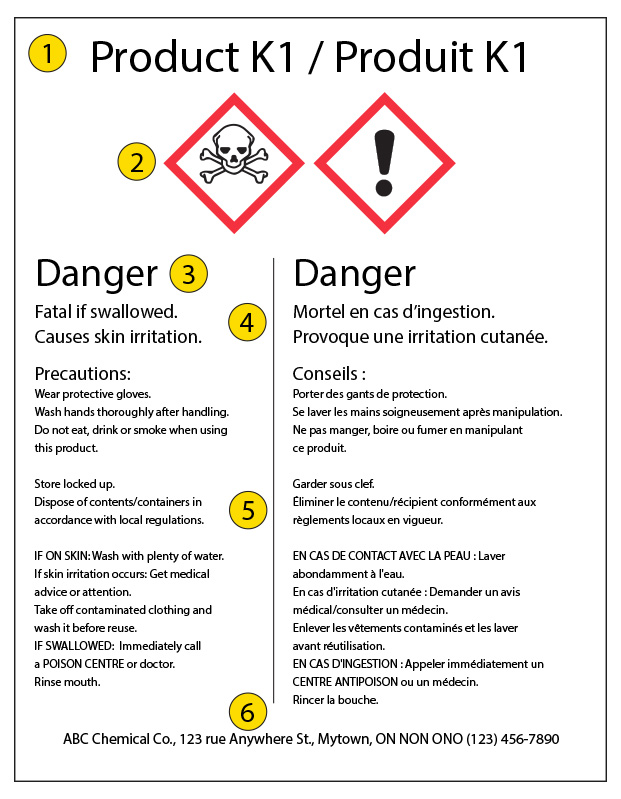
When a supplier produces or imports a hazardous product for distribution and sale in Canada, the supplier must prepare a label that is clearly and prominently displayed on the container. These labels are often the first warning to users about the major hazards of the product. They also outline basic safety precautions that should be followed. The label shown in Figure 1 is an example of an acceptable supplier label from CCOHS (n.d).
Safety Data Sheets
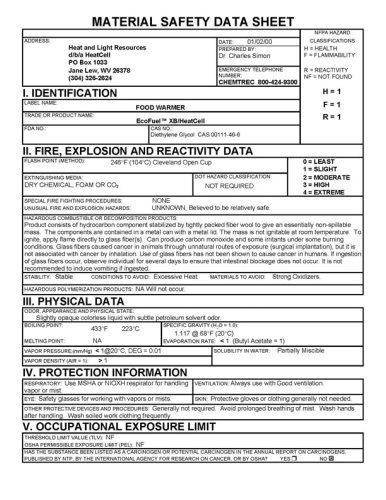
A safety data sheet (SDS) is a technical bulletin that provides specific, detailed information about a product, including its hazards, safe handling instructions, and emergency procedures. Since SDSs contain specific health and safety information for each hazardous product, they should be used as a key source of information for developing training programs and safe work procedures. SDSs are also valuable reference tools for workers, health and safety committees, and emergency service responders and personnel.
For more information, see WHMIS – Safety Data Sheet (SDS) on the CCOHS website.
Education and Training
Employers must provide education and training for workers so that they can work safely with, or near, hazardous products. Workers need to know how WHMIS works, the dangers of hazardous products in their workplace, and the procedures they must follow to work safely with the products.
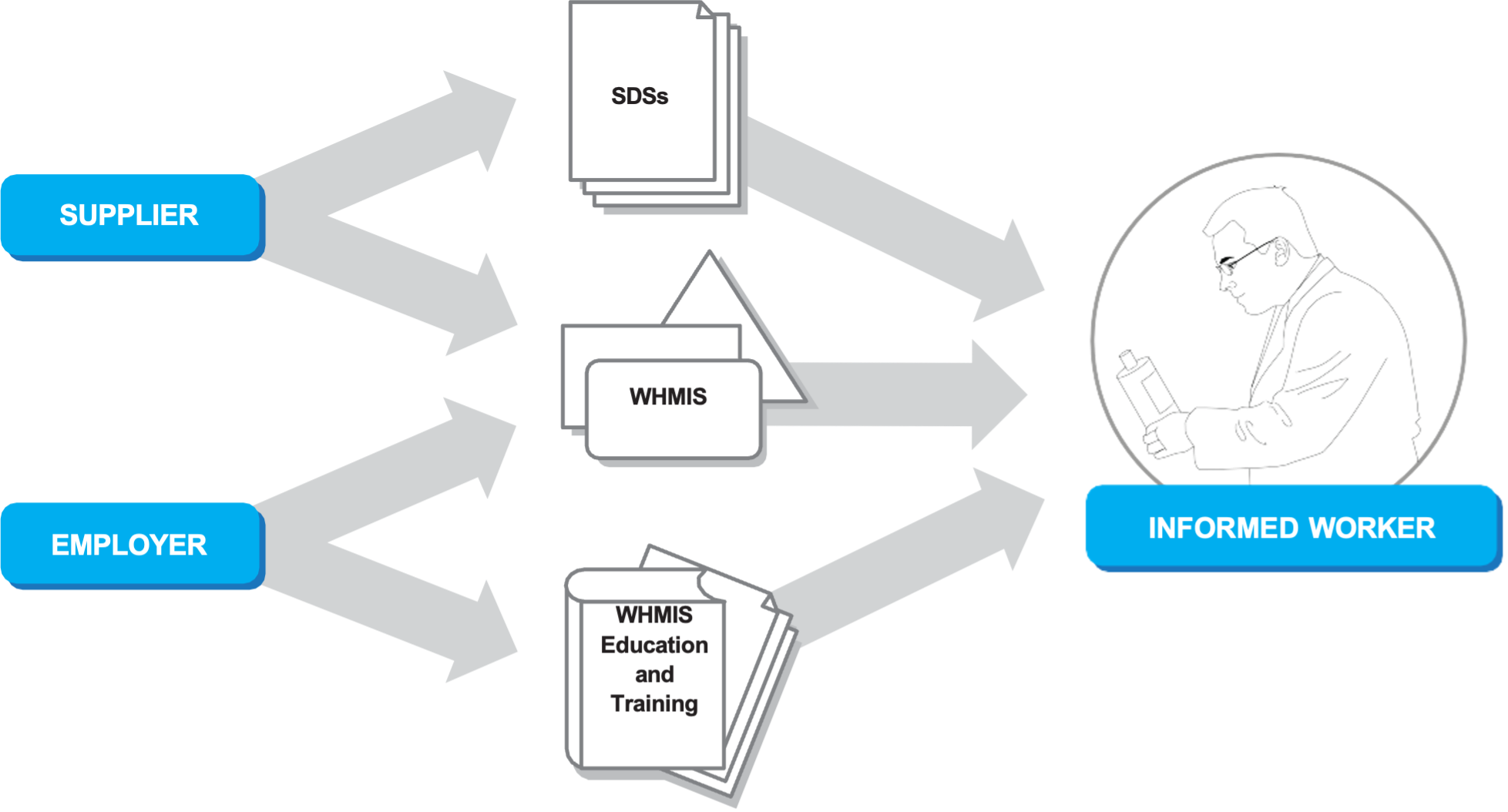
Workers should be able to answer these questions for every hazardous product they use:
- What are the hazards of the product?
- How do I protect myself from those hazards?
- What do I do in case of an emergency?
- Where can I find more information?
 Self-Test A-3.2: Describe the Key Elements of WHMIS
Complete Self-Test A-3.2 and check your answers.
If you are using a printed copy, please find Self-Test A-3.2 and Answer Key at the end of this section. If you prefer, you can scan the QR code with your digital device to go directly to the interactive Self-Test.
References
BC Industry Training Authority. (2019). Piping trades apprenticeship program: Perform safety related functions—Level 1 harmonized [Binder]. Crown Publications, Queen’s Printer for British Columbia. https://www.crownpub.bc.ca/Product/Details/7960000260_S
Camosun College. (2015). Line A: Safe Work Practices — Competency A-3: Handle Hazardous Materials Safely (BCcampus). https://collection.bccampus.ca/textbook/PMfB6kHM/
Camosun College. (2015). Trades Access Common Core Competency A-3: Handle Hazardous Materials Safely. Victoria, B.C.: Crown Publications. Download for free from the B.C. Open Textbook Collection (https://open.bccampus.ca/browse-ourcollection/find-open-textbooks/).
Canadian Centre for Occupational Health and Safety. (n.d.). Safety data sheets (SDSs) in WHMIS and GHS. https://www.ccohs.ca/oshanswers/chemicals/whmis_ghs/sds.html
Canadian Centre for Occupational Health and Safety. (n.d.). WHMIS – labels. Government of Canada. https://www.ccohs.ca/oshanswers/chemicals/whmis_ghs/labels.html
Media Attributions
All figures are sourced from Industry Training Authority (2019) and/or Camosun College (2019) and are used under the Creative Commons Attribution 4.0 (CC BY 4.0) licence unless otherwise noted. Images copyrighted by the BC Industry Training Authority are licensed under a Creative Commons Attribution-NonCommercial-ShareAlike 4.0 (CC BY-NC-SA 4.0) licence.
- Figure 1 Supplier label from CCOHS: WHMIS – Labels is used with permission.
- Figure 2 Safety Data Sheet by sid [sidknee23] on Flickr is used under a CC BY-NC-ND 2.0 license.
A safety system that helps workers understand the dangers of hazardous products and how to use them safely at work. (Section A-3.2)
A safety tag or sticker on a product container that shows hazards, symbols, and basic safety information. (Section A-3.2)
Documents that explain the hazards of a product and give important information on how to use, store, and handle it safely, and what to do in an emergency. (Section A-3.1 and Section A-3.2)