A-4.1 Describe Safety Gear and Work Clothing
Before starting any task, every worker must consider how to protect themselves from potential hazards on the job. The first line of defence is always to eliminate or control hazards. When that isn’t possible, personal protective equipment (PPE) becomes essential. PPE includes everything from safety boots and eye protection to gloves, hard hats, and hearing protection. Knowing when and how to use PPE equipment—and how to maintain it properly—helps keep workers safe and ensures work meets WorkSafeBC and industry standards.
One of the most important concepts to remember is that you are responsible for your own safety and the safety of others. Personal protective equipment (PPE) is the last line of defence against personal injury, so using it correctly and taking proper care of it are critical to protecting yourself on the job.
The best protective equipment is of no use to you unless you do the following four things:
- Inspect it regularly.
- Care for and maintain it properly.
- Use it correctly and receive training when needed.
- Never alter or modify it in any way.
The general areas that require your attention include:
- Personal apparel
- Personal protection equipment
- WorkSafeBC regulations
WorkSafeBC Regulations
WorkSafeBC regulations state that a worker is responsible for providing:
- Clothing needed for protection against the natural elements
- General-purpose work gloves
- Appropriate footwear, including safety footwear
- Safety headgear
WorkSafeBC regulations state that the employer is responsible for providing, at no cost to the worker, all other items of personal protective equipment required by the regulations.
WorkSafeBC PPE Information Sheets
WorkSafeBC personal protective equipment (PPE) information sheets can be used to inform employers, supervisors and workers about PPE in general. These sheets are ideal for worker orientation and crew talks and for posting on bulletin boards. The sheets explain the PPE required by the regulations for specific industries and hazards as well as describing when and how different types of PPE must be worn.

Go to Personal protective equipment (PPE) on the WorkSafeBC website to see examples of PPE information sheets.
Personal Apparel
Workers are required to supply the appropriate safety footwear and suitable clothing before being permitted to work in a shop or on a work site. There are a number of important safety considerations to be aware of for clothing, hair, and jewellery that are common to all job sites.
Clothing
Workers must wear close-fitting clothing (that is, not ragged or frayed) if they are working near moving machinery. Scarves, ties, shirts, pant cuffs, and gloves may become workplace hazards. For example, if your shirt cuff is loose, you risk getting it caught in a machine and injuring or breaking your arm if it is pulled around the shaft.
Oily, greasy, and/or synthetic clothes (e.g., rayon, nylon, polyester) are of concern when working near sparks or open flames. As well as being fire hazards, oily or greasy clothes may cause skin irritation.
Workers must use clothing to protect the body from as much dirt and as many chips and sparks as possible. Short pants, short-sleeved shirts, and sandals are not considered adequate on most job sites. Choose clothing that is appropriate for the task you are attempting.
Pant legs should not be tucked inside boots when working with or near a torch, grinder, or chipper. Hot pieces of metal may fall inside a boot and cause a bad burn before the boot can be removed. Workers may also require flame-resistant/retardant clothing if they are working where they may be exposed to flash fires or similar hot work hazards.
High-Visibility Apparel
Wear high-visibility clothing in a colour that contrasts with the environment so you can be seen at a distance. Make sure your high-visibility clothing is not covered by other garments. You must wear this clothing when:
- Working around any moving vehicles, equipment, or lines
- Working alone or in isolation
- Harvesting trees at night
- Performing traffic control in work areas where there is vehicle traffic moving through a work zone, or for falling operations
- Directing helicopter movements
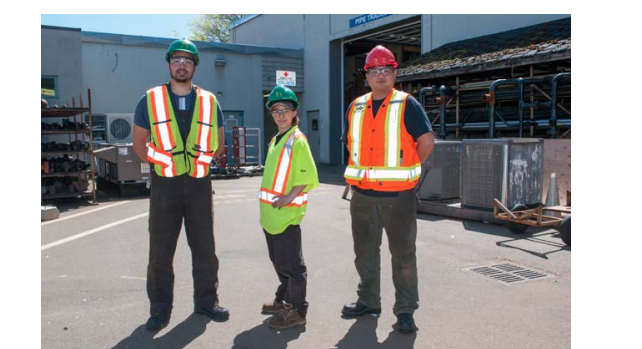
Loose-fitting high-visibility outer clothing must be “tear-away” if worn where it could get caught on moving equipment or on objects such as branches or limbs.
Hair and Beards
Workers with long hair should wear a cap or a hairnet. In addition, beards should be trimmed. Both hair and beards can get caught in machinery or catch fire from sparks or an open flame. Beards may also prevent respirators from fitting properly, which could result in the inhalation of hazardous materials.
Jewellery
Workers must not wear rings, metal watchbands, bracelets, neck chains, or necklaces on a job site. Wearing these items can cause:
- A bad burn, if a metal object (for example, a watchband) touches a hot battery terminal and some other grounding object
- A shock, if working on electrical equipment that has electrical power applied
- Loss of a finger, if a ring gets caught in a piece of machinery
Special Clothing and Gear for Various Weather Conditions
Since many tradespeople work in poor weather, workers must wear appropriate rain gear and warm clothing. Keeping dry is very important for staying warm because wet clothing causes the body to lose heat more quickly.
Some raincoats are designed with vents to help release and draw off perspiration. A raincoat should be large enough to allow arms to move freely and the collar should have a cloth cover or lining to protect the neck from the coat’s cold, wet material.
Rain pants help keep the lower body dry. Wearing only a raincoat allows water to drip onto your legs, making them wet and uncomfortable. It’s also important to keep your feet dry so they stay warm. Rubber boots with steel toe protection and steel sole plates are available for this purpose.
Protective clothing should also be considered to guard against sun exposure. The ultraviolet protection factor (UPF) measures how well clothing blocks ultraviolet (UV) rays. These ultraviolet rays are long wave (UVA) or shortwave (UVB). UVA rays penetrate deep into the skin’s thicker layer of skin called the dermis, while UVB rays cause sunburn. Both UVA and UVB rays can lead to skin cancer.
Sunscreen has a sun protection factor (SPF), which can be deceiving as it merely estimates how much longer you could be out in the sun before burning compared to unprotected skin without sunscreen. Not all sunscreens protect against both UVA and UVB rays. Read the labels on sunscreens carefully to help choose one that suits your needs. Clothing is often a more reliable form of sun protection. For example, clothing with a UPF rating of 20 allows only [latex]\frac{1}{20^\text{th}}[/latex] (5%) of UV radiation to pass through, meaning 95% of UV radiation is blocked. A typical white cotton T-shirt has a UPF rating of about 5, and fabrics with a UPF rating below 15 are generally not considered effective UV protection.
To work safely in cold weather, it is important to wear properly insulated headgear, footwear, and gloves. Wear layered clothing, as layers allow warm air to stay trapped but do not trap perspiration next to the skin. The first layer of clothing should be a moisture-wicking fabric like polypropylene or knitted silk, which will allow the skin to breathe and keep sweat away from skin. The second layer should provide insulation while absorbing perspiration without allowing heat to escape. Wool is ideal because it keeps you warm even when wet. The final outer layer should protect against wind and water.
Personal Protection
On the job site, workers need to wear special personal protective equipment. The equipment you wear will depend on the specific hazards you may expect to encounter. You may be supplied with all or some of the following equipment:
- Goggles
- Face shield
- Gloves
- Safety lock
- Hard hat
- Welder’s apron
- Coveralls
- Respirator
- Hearing protection
- High-visibility vest
- Body harness
Protective equipment can be divided into the following categories:
- Head protection
- Eye protection
- Hearing protection
- Respiratory protection
- Hand and skin protection
- Foot protection
- Fall protection
Selecting PPE
All PPE clothing and equipment should feature a safe design and construction and should be well maintained. Workers should consider the fit and comfort of PPE when selecting appropriate items for their workplace. Most protective devices are available in multiple sizes, and care should be taken to select the proper size. If several different types of PPE are worn together, make sure they are compatible. PPE that does not fit properly can make the difference between being safely covered or dangerously exposed. It may not provide the level of protection desired and may discourage use.
Head Protection
Hard hats protect workers where there is a hazard of head injury from falling, flying or thrown objects, or other harmful contacts. The headband made of webbing inside the hat (also known as a hard hat’s suspension system) provides a space between the shell and your head, which lessens the impact of anything falling on your head. The headband is adjustable.
Most job sites require that hard hats be worn at all times while on the site. The shells of most hard hats are now almost always made from high-impact plastic, but a few are still made from metal alloys. Do not wear a metal alloy hard hat when working on electrical equipment.
Hard Hat Types
The proper type or class of hard hat required will vary for specific areas or for specific jobs. Different hard hats protect against different types of hazards, such as:
- Banging your head on a sharp or hard object
- Being hit by a falling object
- Receiving a shock when working near electrical apparatus
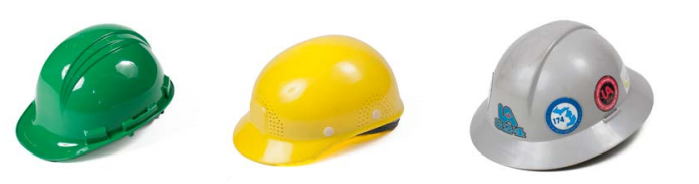
Hard hats must have either CSA or ANSI approval. These standards are similar but not exactly the same. Many manufacturers have their head protection tested to meet both standards. These standards are divided into two types:
- Type 1 for top protection only
- Type 2 for top and lateral protection
Hard hats are also divided into three industrial classes:
- Class E (electrical) – provides head protection against high voltage conductors (20 000 V electrical rating).
- Class G (general) – provides head protection against low voltage conductors (2200 V electrical rating).
- Class C (conductive) – provides lightweight comfort and impact protection but offer no protection from electrical hazards (no electrical rating).
See Personal Protective Equipment: Headwear — Selecting Protective Headwear by CCOHS (n.d.)
Another class of protective headgear on the market is called a “bump hat,” designed for use in areas with low head clearance. Bump hats are recommended for areas where protection is needed from head bumps and lacerations. They are not designed to protect against falling or flying objects.
Periodic cleaning and inspection will extend the useful life of protective headgear. A daily inspection of the hard hat shell, suspension system, and other accessories for holes, cracks, tears, or other damage that might compromise the protective value of the hat is essential. Paints, paint thinners, and some cleaning agents can weaken the shells of hard hats and may eliminate electrical resistance. Consult the helmet manufacturer for information on the effects of paint and cleaning materials on their hard hats. Never drill holes, paint, or apply labels to protective headgear, as doing so may reduce the integrity of the headgear’s materials. Do not store protective headgear in direct sunlight, such as on the rear window shelf of a car, since it can be damaged by sunlight and extreme heat.
Hard hats with any of the following defects should not be used and should be replaced:
- Perforation, cracking, or deformity of the brim or shell
- Any indication of exposure of the brim or shell to heat, chemicals, or ultraviolet light and other radiation (in addition to a loss of surface gloss, such signs include chalking or flaking)
Always replace a hard hat if it sustains an impact, even if damage is not noticeable. It is not necessary to replace the entire hard hat if just the suspension system is damaged. Suspension systems are available as replacement parts if they are damaged or show excessive wear.
Some workers are more comfortable wearing their hard hats backwards. This still meets WorkSafeBC requirements if the hat’s suspension is also reversed, but if you can’t reverse the suspension, you must not reverse the hard hat.
Eye Protection
Your eyes are among the most vulnerable parts of your body, and even a small particle or splash can cause permanent injury. On a busy job site, hazards can come from almost any direction — grinding sparks, flying debris, pressurized fluids, or bright welding arcs. Understanding the risks and choosing the right protective equipment is essential for working safely and confidently.
Eye protection is one of the most important safety concerns of people on the job site. Eye hazards include:
- Splashes from liquids, such as acids and caustics
- Sparks flying off of a grinder
- Dust kicked up by compressed air
- “Flash” from a welder working nearby
- Exposure to laser pointer light
There are many types and styles of eye protection available. Some of the most common types include:
- Safety glasses
- Goggles
- Face shields
- Welding helmets
- Laser safety goggles
Safety Glasses
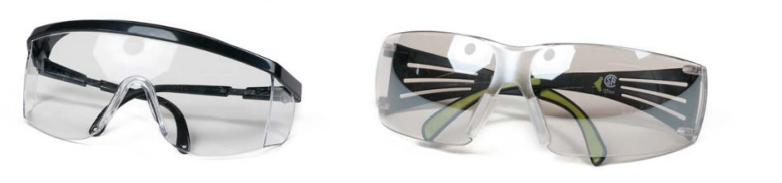
These protective eyeglasses have safety frames constructed of metal or plastic and impact-resistant lenses. Side shields are available on some models.
Wear specially designed and manufactured safety glasses to protect your eyes in activities such as:
- Working on any live electrical equipment
- Using cutting pliers to cut material
- Soldering or de-soldering
- Using an electric hand drill
- Hammering
- Working with tool steel
Goggles
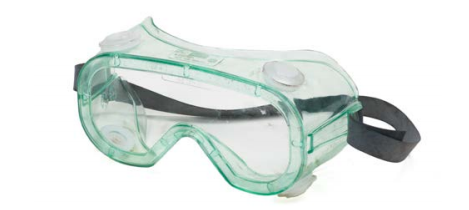
Goggles are a type of tight-fitting eye protection that completely cover the eyes, eye sockets and facial area immediately surrounding the eyes. They provide protection from impact, dust and splashes. Some goggles will fit over corrective lenses.
Wear goggles to protect your eyes when doing activities such as:
- Drilling or chipping, hammering and working with steel
- Using a powder-actuated tool
Face Shields
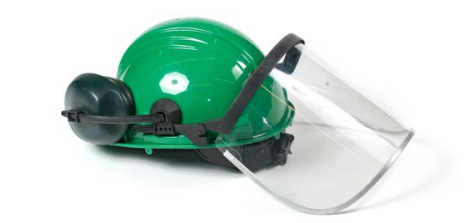
Face shields are transparent sheets of plastic that extend from the eyebrows to below the chin and across the entire width of the head. Some are polarized for glare protection. Face shields protect against nuisance dusts and potential splashes or sprays of hazardous liquids, but they will not provide adequate protection against impact hazards. Face shields used in combination with goggles or safety glasses will provide additional protection against impact hazards.
Wear a face shield to protect your face in activities such as:
- Using a grinder
- Using a drill press
- Using compressed air for cleaning
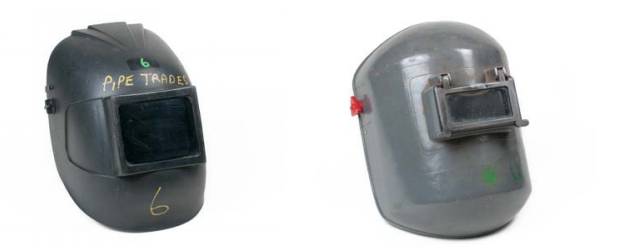
Welding Helmets
Constructed of vulcanized fibre or fibreglass and fitted with a filtered lens, welding helmets protect eyes from burns caused by infrared or intense radiant light. They also protect both the eyes and face from flying sparks, metal spatter, and slag chips produced during welding, brazing, soldering, and cutting operations. Filter lenses have a shade number appropriate to protect against the specific hazards of the work being performed and against harmful light radiation.
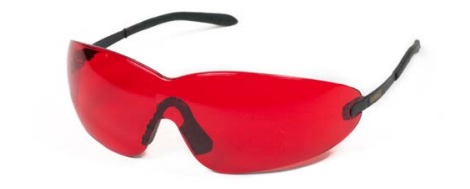
Laser Safety Goggles
These specialty goggles protect against intense concentrations of light produced by lasers. The type of laser safety goggles a worker chooses will depend on the equipment and operating conditions in the workplace.
Never assume that regular prescription glasses, sunglasses, or contact lenses can provide adequate eye protection. Dust particles, wood chips, sparks or welding flash may still cause eye damage if eyes are not properly protected.
Regardless of the job, whether grinding, chipping, drilling or welding, always use adequate eye protection (welding goggles or helmets are not acceptable for grinding). Choose a type or style of eye protection that will protect you in the job that you are doing (e.g., goggles when chipping concrete, a welder’s helmet when welding). Also, always use safety-approved eye protection. Improper or faulty protection devices can also be hazardous.
Hearing Protection
Noise on the job site can affect you in different ways. Being exposed to high noise levels and moderate noise levels over a long period of time can impair your ability to hear specific types of sounds. For example, the noise from diesel-powered vehicles such as trucks can permanently damage your hearing. High noise levels can affect your state of mind, making you easily annoyed, irritable, and mentally fatigued, and can decrease your ability to concentrate and stay alert.
Hearing protection noise reduction ratings (NRR) are given in decibels (dB). If the noise level is 90 dB and a worker is wearing expandable foam plugs rated at 29 dB, the actual noise exposure will be 90 − 29 = 61 dB. When choosing hearing protection devices, you should choose a device that will reduce the noise exposure to a maximum of 85 decibels.
There are four main points to remember when choosing hearing protection:
- Choose a type or style of protection suitable to the job you are doing.
- Ear plugs should be pliable, fit each ear tightly, and be kept clean and free from damage.
- Earmuffs make it easier to hear certain signals in noisy environments.
- Headphones designed for listening to music do not offer suitable protection.
Single-Use Earplugs
These earplugs are made from material like expandable PVC or urethane foam. They are self-forming and, when properly inserted, they work as well as most moulded earplugs.

Pre-Moulded Reusable Earplugs
Pre-moulded earplugs are made from biocompatible silicon, plastic, or rubber and are manufactured as either “one-size-fits-most” or in several sizes to fit small, medium, or large ear canals. Advantages of pre-moulded plugs are that they are relatively inexpensive, reusable, washable, convenient to carry, and come in a variety of sizes.

Custom-Fitted Hearing Earplugs
Made from impressions taken of an individual’s ear, custom-fitted earplugs completely fill the ear canal and match the ear shape of the wearer. Some custom-fitted plugs are designed to let the wearer hear conversations in noisy environments. Others have a communication speaker installed into them.
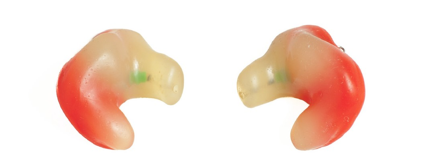
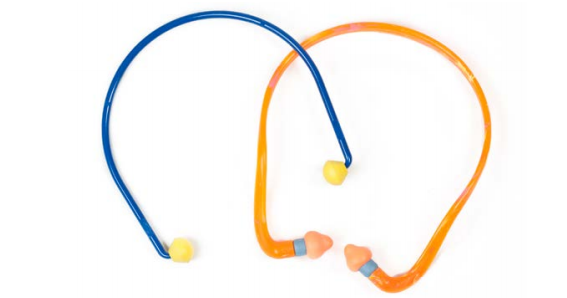
Canal Caps
Canal caps resemble earplugs on a flexible plastic or metal band. The earplug tips of a canal cap may be made of a formable or pre-moulded material. These have the convenience of being easily removed and replaced as needed.
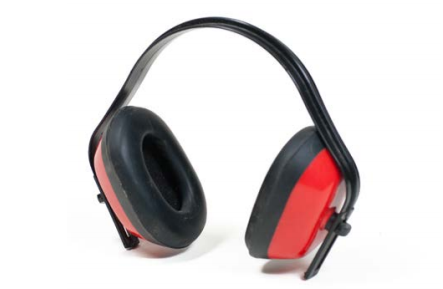
Earmuffs
Earmuffs come in many models designed to fit most people, and some styles can be connected to a hard hat. They work by blocking out noise by completely covering the outer ear.
To work properly, earmuffs must be perfectly sealed around the ears. Their effect may be reduced if glasses, facial hair, or long hair compromise the seal. Facial movements such as chewing may also affect the seal.
Respiratory Protection
Airborne contaminants are among the most dangerous—and least visible—hazards in the workplace. Dust, fumes, mists, and vapours can damage the lungs or lead to long-term health problems even when they can’t be seen or smelled. Understanding when respiratory protection is needed, how to select the right type, and how to maintain it properly is essential for every worker on the job site.
Workers must be aware of any airborne hazards present on the job and must take the necessary precautions to protect the respiratory system. Examples of hazards include airborne particles such as body filler, asbestos, or dust, as well as toxic gases or fumes. All of these are harmful if inhaled, but workers can protect themselves by wearing an approved respirator.
If you are required to use a respirator, you will need the appropriate training to select, test, wear, and maintain this equipment. Always use the appropriate respirator for the hazard involved and the extent and nature of the work to be performed, which includes choosing the correct type of cartridge and filter. Respirators must be kept clean and sterilized according to the manufacturer’s instructions. It is very important to check a respirator carefully for damage and proper fit. All respirators must be properly fitted to your face, and the seal must be checked each time the respirator is used.
Before selecting your respirator, you should consider the environment and conditions that you are going to be working in. A positive pressure respirator will supply air to the inside of a face mask that will exceed the ambient air pressure on the outside of the respirator. Self-contained breathing apparatus (SCBA) and air respirators are examples of positive pressure respirators. A negative-pressure respirator will be under negative pressure when compared to the ambient air while the user inhales. Air-purifying respirators are negative-pressure respirators.
There are three types of respirators commonly used for various atmosphere conditions in the workplace. These are:
- Air-line or supplied air respirators
- Self-contained breathing apparatus (SCBA)
- Air-purifying respirators
Air-line Respirators
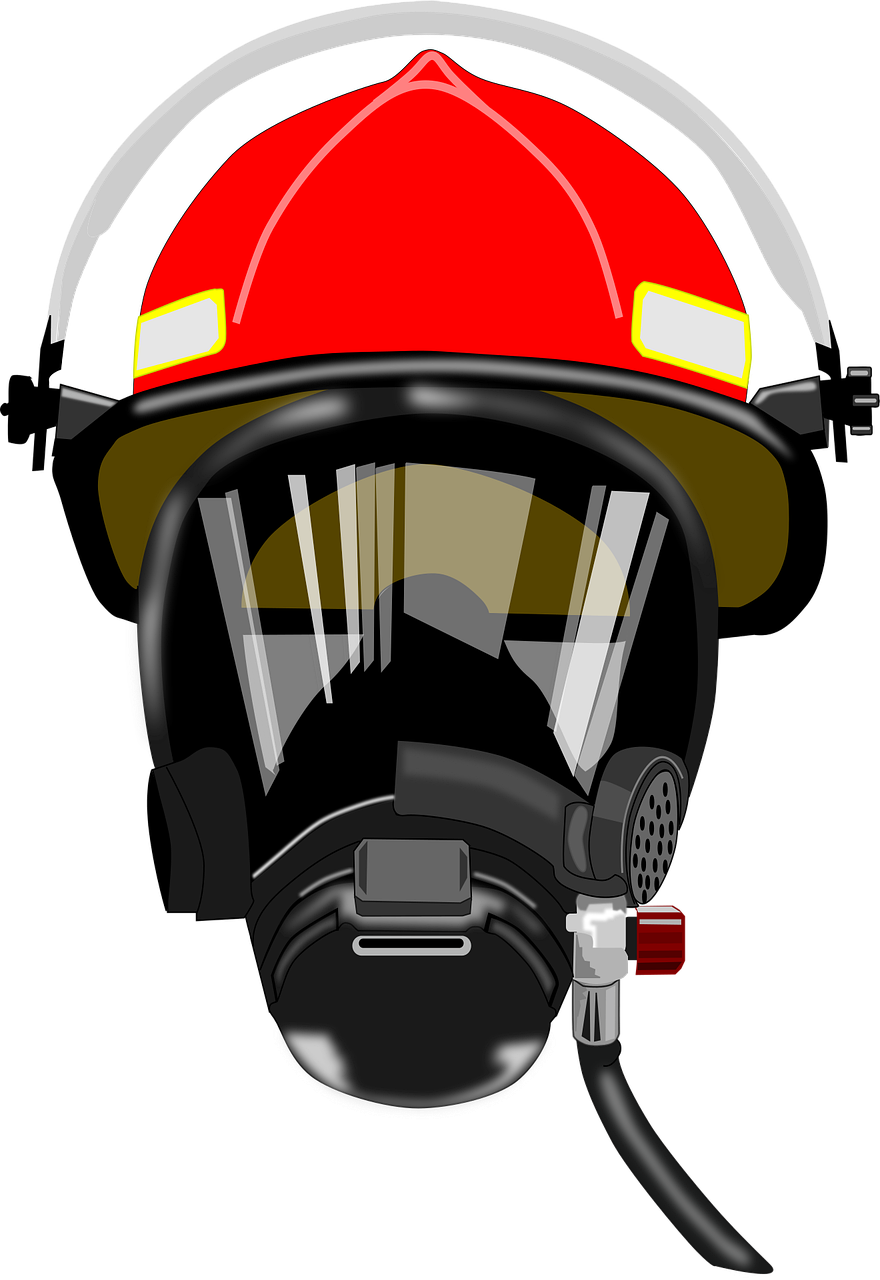
Air-line or supplied-air respirators have a mask or hood with a remote air supply available through a connected hose. This type of respirator is used where there is not enough oxygen or there are toxic gases or fumes in the air.
Self-Contained Breathing Apparatus (SCBA)
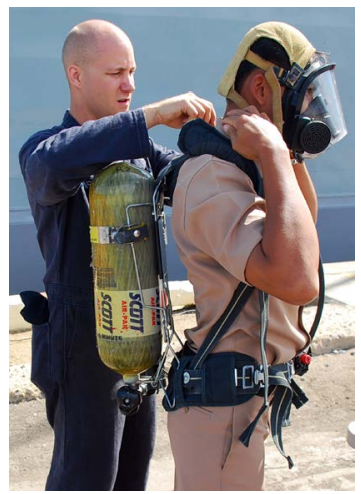
An SCBA draws air from a compressed-air cylinder, which is strapped to the worker’s back.
This style of respirator is used when there is not enough oxygen on the work site or there are toxic gases or fumes in the air. An SCBA has the added advantage of an independent air supply without the need for hose, which is why this type of respirator is more commonly used in rescue and emergency situations.
Air-Purifying Respirators
There are two common types of air-purifying respirators:
- Dust/mist masks
- Cartridge respirators
These types of respirators cannot be used in an oxygen-deficient environment. The full face mask with a chemical canister can be used to protect against short exposure to dangerous gases or fumes, such as an emergency escape situation, as the cartridge in the respirator is able to neutralize the gases for a very short time only.
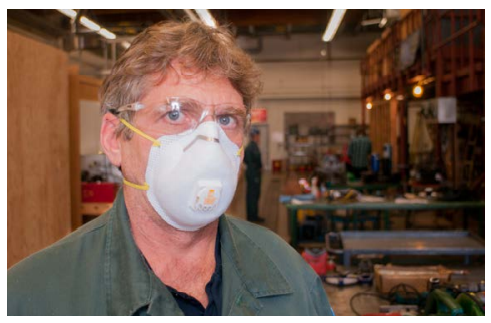
Dust/Mist Masks
Dust masks are made of paper or soft non-woven fibre and simply fit over the mouth and nose. These generally offer protection against nuisance dusts and fine mists only. Some models have a built-in exhaust valve for more comfort.
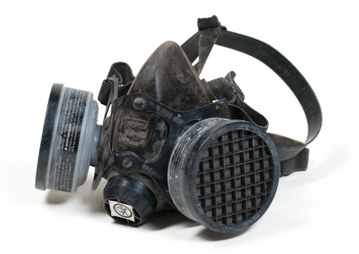
Cartridge Respirators
Cartridge respirators are commonly used in conditions where there are low concentrations of organic gases, pesticides, and paint vapours. These come in half-mask or full-face piece designs. Both of these designs are also made in one- or two-cartridge styles. Do not use these types of respirators to protect against highly toxic gases.
Hand and Skin Protection
WorkSafeBC accident statistics indicate that over 30 percent of work injuries involve fingers, hands, and arms, and many of these accidents could be avoided by using appropriate hand protection. As a trades worker, you are ultimately responsible for ensuring that you use the correct hand protection for each hazardous situation.
Gloves
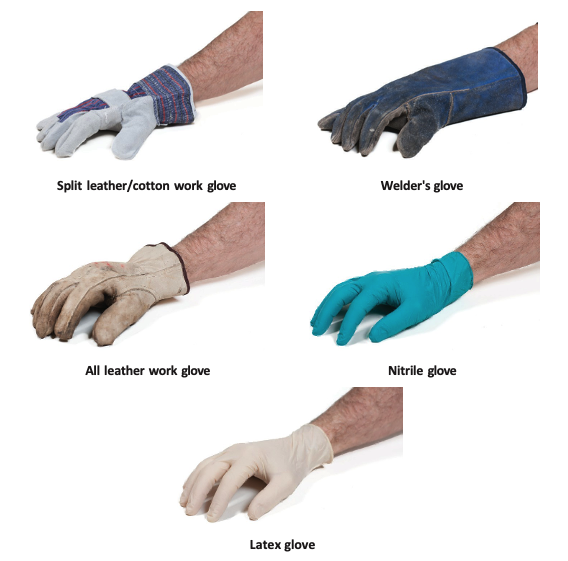
Gloves are manufactured from materials such as cotton, leather, rubber, metal and other synthetics and are tailored to meet every need for hand protection in every trade area:
- Leather or vinyl-coated gloves should be used when handling lumber or steel.
- Gauntlet-type welder’s gloves should be used when welding or flame cutting.
- Special heat-resistant gloves should be used when handling hot metal.
- Rubber or approved plastic-treated gloves should be used when handling acids and cleaning solutions.
See Personal Protective Equipment: Chemical Protective Clothing – Glove Selection by CCOHS (n.d.).
Barrier Creams
If you are exposed to chemicals that can strip oils from your skin, you are susceptible to developing dermatitis. Avoid this condition by using proper gloves, along with a barrier cream, if you notice your skin drying out.
Foot Protection
Your feet deserve as much consideration as your eyes, ears, or hands.
Potential hazards to your feet include:
- Heavy objects falling on them
- Stepping on sharp objects
- Having hot sparks or slag fall inside your shoes
You must wear safety footwear appropriate to the job you are doing. For example, leather boots are required in the welding shop, where there are specific hazards from sparks and molten slag.
Leather is not impervious to all chemicals and, therefore, is not a good choice when walking in wet concrete. In that case, rubber boots with steel toe and sole protectors would be better. Footwear should be inspected regularly and replaced if worn out.
CSA Standards
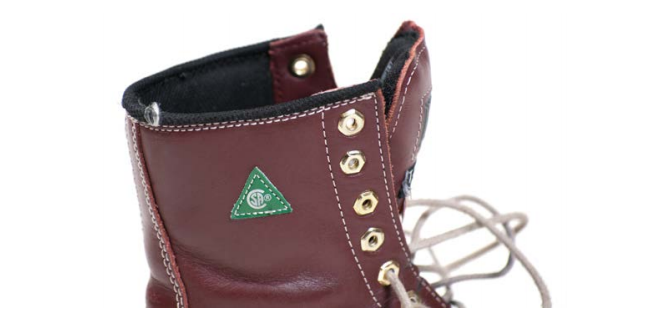
Due to the dangers listed above, you must wear safety footwear that is CSA approved. Look for the green triangle with the CSA logo.
Fall Protection
Working at heights is one of the most common causes of serious injuries and fatalities in the construction and piping trades. Falls can happen quickly—from ladders, scaffolds, platforms, or even ground-level slips—which is why planning, training, and the right protective equipment are essential. Fall protection systems are designed to prevent falls or reduce the impact if one occurs, keeping workers safe while working above ground. This category is covered in detail in section A-4.2 Describe Fall Protection Systems.
General Care of PPE
Remember that PPE is the last line of defence against personal injury, so using it properly and taking care of it are very important. Be sure to do all of the following:
- Regularly inspect it.
- Properly store and care for it.
- Use it properly when it is needed.
- Never alter or modify it in any way.
- Maintain it.
- Refer to the manufacturer’s documentation for further information.
 Self-Test A-4.1: Describe Safety Gear and Work Clothing
Complete Self-Test A-4.1 and check your answers.
If you are using a printed copy, please find Self-Test A-4.1 and Answer Key at the end of this section. If you prefer, you can scan the QR code with your digital device to go directly to the interactive Self-Test.
References
BC Industry Training Authority. (2019). Piping trades apprenticeship program: Perform safety related functions—Level 1 harmonized [Binder]. Crown Publications, Queen’s Printer for British Columbia. https://www.crownpub.bc.ca/Product/Details/7960000260_S
Camosun College. (2015). Line A: Safe Work Practices — Competency A-4: Describe Personal Safety Practices (BCcampus). https://collection.bccampus.ca/textbook/xQpDrgQM/
Camosun College. (2015). Trades Access Common Core Competency A-4: Describe Personal Safety Practices. Victoria, B.C.: Crown Publications. Download for free from the B.C. Open Textbook Collection (https://open.bccampus.ca/browse-ourcollection/find-open-textbooks/). https://pressbooks.bccampus.ca/tradesaccesscommoncorelineaa4/chapter/personal-protection/
Canadian Centre for Occupational Health and Safety (CCOHS). (n.d.). Personal Protective Equipment: Chemical Protective Clothing – Glove Selection. Government of Canada. https://www.ccohs.ca/oshanswers/prevention/ppe/gloves.html [Date modified: 2025-08-28]
Canadian Centre for Occupational Health and Safety (CCOHS). (n.d.). Personal Protective Equipment: Headwear — Selecting Protective Headwear. Government of Canada. https://www.ccohs.ca/oshanswers/prevention/ppe/protective-headwear.html [last revised: 2023-11-22]
WorkSafeBC. (n.d.). Personal protective equipment (PPE). https://www.worksafebc.com/en/health-safety/tools-machinery-equipment/personal-protective-equipment-ppe
Media Attributions
All figures are sourced from Industry Training Authority (2019) and/or Camosun College (2019) and are used under the Creative Commons Attribution 4.0 (CC BY 4.0) licence unless otherwise noted. Images copyrighted by the BC Industry Training Authority are licensed under a Creative Commons Attribution-NonCommercial-ShareAlike 4.0 (CC BY-NC-SA 4.0) licence.
- Figure 13 Breather defense firefighter by OpenClipart-Vectors on Pixabay is used under the Pixabay Content License
Safety gear such as gloves, goggles, or boots worn to protect the body. (Section A-1.4; Section A-4.1)
Clothing that is bright and easy to see, especially around vehicles or machinery. (Section A-4.1)
A number that shows how well clothing blocks harmful UV rays. (Section A-4.1)
Invisible rays from the sun that can damage your skin. (Section A-4.1)
A number that shows how well sunscreen protects your skin from sunburn. (Section A-4.1)
The adjustable strap system inside a hard hat that helps absorb impact. (Section A-4.1)
A certification that shows a product meets safety standards set by the American National Standards Institute (ANSI). If equipment has ANSI approval, it has been tested to make sure it meets certain safety requirements. (Section A-4.1)
A number that shows how much noise hearing protection can block. (Section A-4.1)
A mask or device worn to protect your lungs from dust, fumes, or harmful gases. (Section A-4.1)
A respirator that pushes clean air into the mask to keep harmful air out. (Section A-4.1)
A breathing device with its own air tank worn on the back. (Section A-4.1)
A respirator that pulls air through a filter when you breathe in. (Section A-4.1)
A respirator that filters harmful particles or gases from the air. (Section A-4.1)
A skin problem that causes redness, dryness, or irritation. (Section A-4.1)
Certified by the Canadian Standards Association to meet safety standards. (Section A-4.1)