A-5.2 Identify Class of Fires and Extinguishers
During combustion, enough heat is produced to raise the fuel’s temperature and release vapours that can ignite. The fire will continue burning as long as fuel, heat, and oxygen are present. To stop the process, an extinguishing agent — such as a fire extinguisher — must be used to break this cycle.
When sufficient heat is generated during combustion to raise the temperature of the fuel, vapours that can ignite are produced, and the burning process will continue as long as there is enough fuel, heat, and oxygen to sustain it. The process must be interrupted by means of an extinguishing agent, such as a fire extinguisher.
Classes of Fires
Fires are divided into five main classes: A, B, C, D, and K. The class of fire is important to know when selecting a fire extinguisher because it determines the type of extinguisher required. The symbols shown in Table 1 may be the only indication you have of the best use for a fire extinguisher.
| Fire Class | Type of Fire | Common Materials Involved | Recommended Extinguishers | Important Safety Notes |
|---|---|---|---|---|
| Class A, Green
|
Ordinary combustibles | Wood, paper, cloth, rubber, many plastics | Water, foam, multipurpose dry chemical | Works by cooling the fire below ignition temperature |
| Class B, Red
|
Flammable liquids and gases | Gasoline, oil, grease, paint, solvents | Foam, CO₂, dry chemical | Never use water — it can spread the fire |
| Class C, Blue
|
Energized electrical equipment | Electrical panels, wiring, appliances | CO₂, dry chemical | Must use non-conductive agents; de-energize equipment before using water |
| Class D, Yellow
|
Combustible metals | Magnesium, sodium, titanium, potassium | Special dry powder agents | Never use water — may cause explosion or violent reaction |
| Class K, Black
|
Cooking oils and fats | Commercial kitchen oils and grease | Wet chemical (Class K extinguisher) | Designed for high-temperature cooking fires |








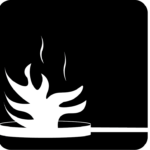

Types of Fire Extinguishers
All work sites must have portable fire extinguishers. These come in many sizes and colours and have several markings on them. Although most extinguishers can be used on more than one class of fire, none can be successfully used for all types of fire situations.
It is important that you know the location of and how to operate each extinguisher in your workplace. Because each manufacturer uses a slightly different operating procedure, you should carefully read the markings and instructions on the extinguisher. They explain how to use it and where it is most effective.

Class A Fire Extinguishers
Class A extinguishers work by cooling the fire below its ignition temperature. They may use pressurized water, foaming agents, or multipurpose dry chemical agents. Water-based extinguishers may be pressurized, gravity-fed, or manually pumped.

Class B Fire Extinguishers
Class B extinguishers should be used on flammable liquids or gases such as oils, paints, gasoline, and grease. These extinguishers may come in several types, including foam, carbon dioxide (CO2), ordinary dry chemical, and multipurpose dry chemical.

Class C Fire Extinguishers
Class C extinguishers are used on energized electrical equipment. These extinguishers may contain carbon dioxide (CO2), ordinary dry chemicals, or multi-purpose dry chemicals. Carbon dioxide extinguishers are preferred for sensitive electrical equipment and computer components because they don’t leave any harmful residue.

Class D Fire Extinguishers
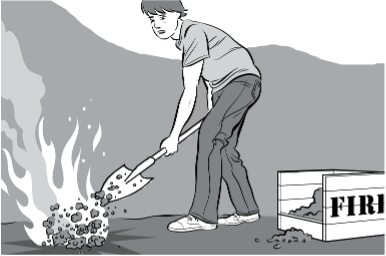
Class D fires involve combustible metals. The type of extinguisher required depends on the metal that is burning. medium may include dry graphite, dry cast iron turnings, or other approved compounds with a graphite base, or a dry substance with a chloride base. When trying to suppress a Class D fire in its initial stage, localize the fire by scraping away any adjacent metal chips. The smothering material should then be applied gently to avoid scattering the fire. The material forms an air-excluding crust over the burning metal.
Class K Fire Extinguishers
Class K fires involve combustible cooking oils and fats. These fires can spread rapidly and must be treated differently than Class B fires. Class K extinguishers may be portable or installed in commercial or industrial kitchens within ventilation hoods.

Multipurpose Fire Extinguishers
Manufacturers produce and supply single fire extinguishers designed for multiple classes of fire. Multipurpose extinguishers may contain dry powders that suppress more than one type of fire, such as Class A, B, or C fires. Carbon dioxide (CO2) extinguishers are often labelled to fight both Class B and C fires.
Dry Chemical Extinguishers
Dry chemical extinguishers are filled with either foam or powder, usually sodium bicarbonate (baking soda) or potassium bicarbonate, and pressurized with nitrogen. Baking soda is effective because it decomposes at 700° C (1,580° F) and releases carbon dioxide (which smothers oxygen) once it decomposes.
Dry chemical extinguishers interrupt the chemical chain reaction of the fire by coating the fuel with a thin layer of powder or foam, separating the fuel from the surrounding oxygen. When used indoors, dry powder chemical extinguishers can reduce visibility and damage goods and machinery.
Dry chemical extinguishers are designed for Class B and C fires or Class A, B, and C fires, depending on the type of agent contained in the cylinder.
Three of the most commonly used dry chemicals are:
- Triplex dry chemical: a multipurpose dry chemical agent effective in extinguishing Class, A, B and C fires, generally considered the best all-round fire extinguisher
- Quick-Aid dry chemical: a specially treated sodium bicarbonate dry chemical agent that is moisture resistant and free-flowing; it is effective, approved for use on Class B and C fires, and offers the lowest cost per kilo of the three dry chemical agents
- Purple K dry chemical: a specially treated potassium bicarbonate dry chemical agent that provides effective protection against Class B and C fires and is approximately twice as effective as the standard sodium bicarbonate dry chemical

Carbon Dioxide (CO2) Extinguishers
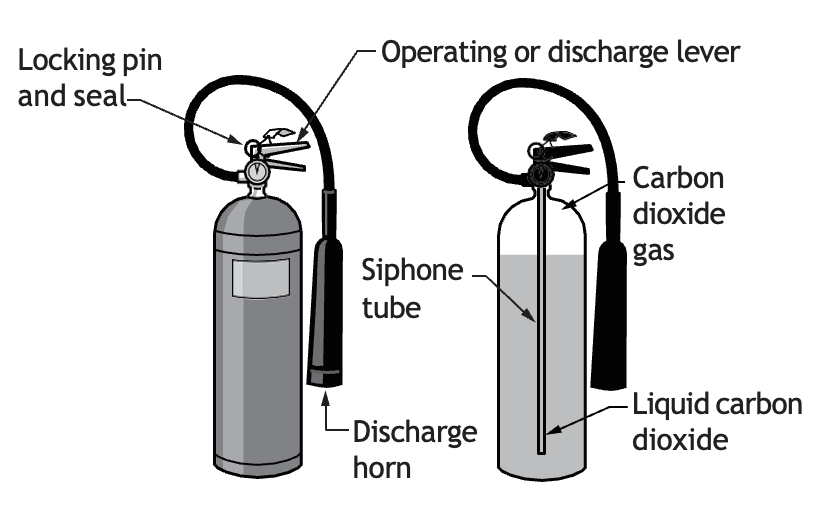
A CO2 extinguisher is recognized by its fibre discharge horn. It is less effective than dry chemical extinguishers but has the advantage of not leaving a residue that must be cleaned up.
CO2 cylinders are red and range in size from 2.26 kg (5 lb.) to 45 kg (100 lb.) or larger. In the larger sizes, the hard horn is located on the end of a long, flexible hose.
These extinguishers contain pressurized carbon dioxide gas. CO2 is heavier than oxygen, so these extinguishers work by displacing or taking away oxygen from the surrounding area. Additionally, CO2 is very cold and works by cooling the fuel.
Carbon dioxide is ideal for fires involving electrical apparatuses and will also extinguish Class B liquid fires. However, the fire could reignite if the cooling effect has not reached the ignition temperature of the fuel.
Halon Extinguishers
Halon extinguishers were designed for Class A, B, and C fires.
Halon is effective but has been banned because it damages the ozone layer. Existing units may still be found in some locations but cannot be refilled once discharged.
Emergency Fire Blanket
Emergency fire blankets are designed to smother flames if clothing catches fire. The blankets are about 2 m × 2 m (6 ft × 6 ft) in size.
Fire Extinguisher General Requirements
The following are general guidelines for maintaining and storing fire extinguishers:
- Portable fire extinguishers must be mounted in clearly visible and accessible locations.
- The size of an extinguisher is often based on the weight of the extinguishing agent. For example, 1 kg (2.5 lb.) is a small extinguisher.
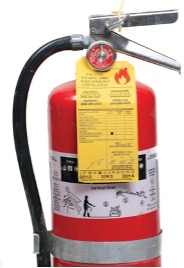
- Class A and B extinguishers may have a number before the letter. These numbers allow you to compare the relative effectiveness of various fire extinguishers. For example, a multi-class extinguisher may be labelled as Class ABC—2.25 kg (5 lb.), 3A:10B:C. The A rating is a water equivalency rating. The number preceding the A multiplied by 1.25 gives the equivalent extinguishing capability in gallons of water. The number preceding the B indicates the size of fire in square feet that an ordinary user should be able to cover. The C does not have a number assigned.
- Portable fire extinguishers must be kept fully charged and operational.
- Fire extinguishers must have an annual maintenance inspection, at minimum.
- Records must be kept that identify the inspection, testing and maintenance/expiry dates and who completed the work.
- When an extinguisher is removed for maintenance or recharge, an alternate must be provided.
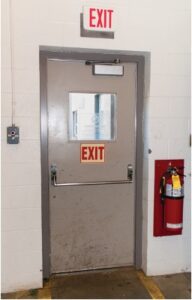
- Extinguishers should be located near exits. The location of the extinguisher should be clearly marked.
- All employees must be trained in the general principles of fire extinguisher use and the application hazards involved with first response firefighting.
 Self-Test A-5.2: Identify Class of Fires and Extinguishers
Complete Self-Test A-5.2 and check your answers.
If you are using a printed copy, please find Self-Test A-5.2 and Answer Key at the end of this section. If you prefer, you can scan the QR code with your digital device to go directly to the interactive Self-Test.
References
BC Industry Training Authority. (2019). Piping trades apprenticeship program: Perform safety related functions—Level 1 harmonized [Binder]. Crown Publications, Queen’s Printer for British Columbia. https://www.crownpub.bc.ca/Product/Details/7960000260_S
Camosun College. (2015). Line A: Safe work practices — Competency A-5: Describe Fire Safety. BCcampus. https://collection.bccampus.ca/textbook/VPwUd4rq/
Camosun College. (2015). Trades access common core competency A-5: Describe Fire Safety. Victoria, B.C.: Crown Publications. Download for free from the B.C. Open Textbook Collection (https://open.bccampus.ca/browse-ourcollection/find-open-textbooks/).
Media Attributions
All figures are sourced from Industry Training Authority (2019) and/or Camosun College (2019) and are used under the Creative Commons Attribution 4.0 (CC BY 4.0) licence unless otherwise noted. Images copyrighted by the BC Industry Training Authority are licensed under a Creative Commons Attribution-NonCommercial-ShareAlike 4.0 (CC BY-NC-SA 4.0) licence.
- Figure 3 Class K fire extinguisher (photos) are by Daniel Abdulai, esteemed team member of the TRU Open Press. This image is subject to the CC BY-NC-SA license.
A substance used to put out a fire. (Section A-5.1)
A category that describes the type of material that is burning. (Section A-5.2)
The temperature at which a substance starts to burn. (Section A-5.1)
Able to catch fire easily. (Section A-5.2)
Electrical equipment that is connected to power. (Section A-5.2)
Material left behind after something is used. (Section A-5.2)
An extinguisher that can be used on more than one class of fire. (Section A-5.2)
A fire extinguisher that uses powder to put out a fire. (Section A-5.2)
A continuing chemical process that keeps a fire burning once it has started. (Section A-5.1)
A protective layer in the atmosphere that shields Earth from harmful sun rays. (Section A-5.2)